Article What a torn vapor barrier actually costs later.
A tear in a vapor barrier may not look like much. Before the concrete is poured, it may be nothing more than a damaged section of plastic beneath the slab: visible, accessible, and relatively straightforward for the builder to address. After the concrete is poured, that same location is beneath several inches of concrete and part of a finished home. That changes everything.
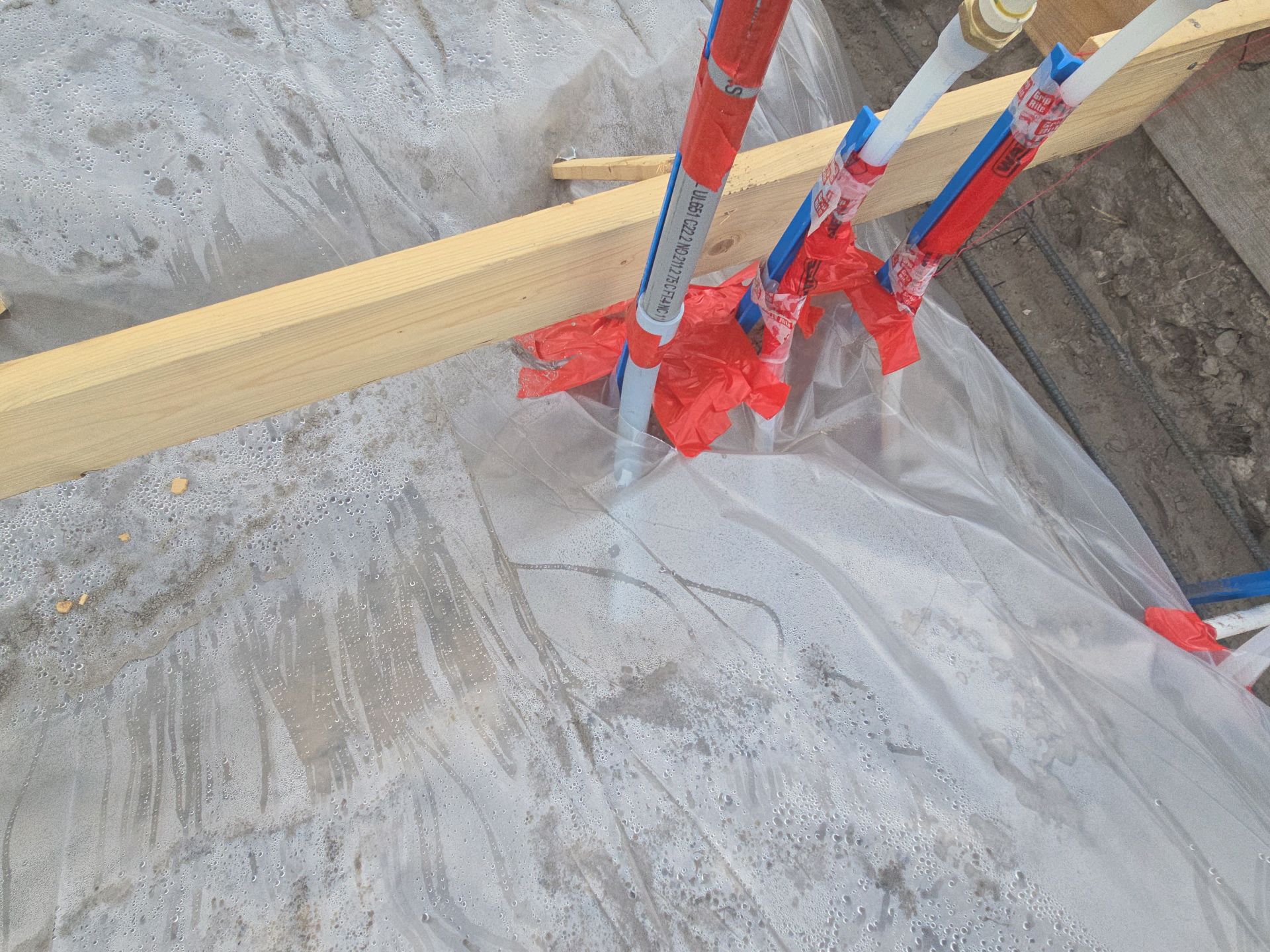
What the vapor barrier is doing beneath the slab
Beneath a concrete slab, the vapor barrier separates the slab from the soil below and helps limit the movement of ground moisture into the concrete. In Florida, where warm temperatures, high humidity and moisture are part of the building environment, controlling moisture movement through the building assembly matters.
The barrier is installed before reinforcement and concrete placement. Seams, penetrations, edges and damaged sections all affect the continuity of that barrier. And once the slab is poured, most of it will never be visible again.
A small tear is easier to address before concrete
Construction sites are active environments. Workers move across the slab area. Reinforcement is installed. Plumbing, electrical and other penetrations pass through the future slab. Materials and equipment are moved into position. During that process, the vapor barrier can become torn, punctured, displaced, or inadequately sealed around penetrations.
The significance of the condition varies. Not every small imperfection means the home will develop a moisture problem. But before the pour, there is an important advantage: the condition can still be seen. That gives the builder an opportunity to evaluate the affected area and make the appropriate correction before concrete permanently conceals it.
After the pour, access is gone
Once concrete covers the vapor barrier, visual access ends. If a moisture-related concern develops later, determining the source can be considerably more complicated, because the component intended to help control moisture beneath the slab can no longer be directly inspected. The investigation may involve moisture testing, evaluation of flooring materials, examination of plumbing systems, environmental conditions, or other diagnostic work before anyone can determine why elevated moisture is present.
That is where the real cost begins. It is not necessarily the price of repairing a piece of plastic. It is the cost and complexity of dealing with a condition after the opportunity for a simple pre-pour correction has passed.
Moisture can affect more than the concrete
Concrete is not completely impermeable to moisture. Moisture vapor moving through a slab can affect materials installed above it, particularly when those materials or their adhesives are sensitive to moisture. Depending on the flooring system and the conditions present, excessive moisture can contribute to flooring failures, adhesive problems, staining, deterioration, or other moisture-related concerns.
At that point, addressing the symptom above the slab does not necessarily explain what is happening below it. The homeowner may be dealing with finished flooring, baseboards, furniture, occupied rooms and diagnostic work instead of an exposed construction site. That is a very different situation from repairing a visible area before the concrete truck arrives.
This is why pre-slab timing matters
A pre-slab inspection happens during one of the shortest inspection windows in new construction. The foundation preparation is visible. Reinforcement is exposed. Underground and in-slab components can be observed. The vapor barrier is accessible. Then the concrete arrives. After the pour, many of those components become part of the home's permanent concealed construction.
A pre-slab inspection cannot guarantee that a future moisture problem will never occur, and a damaged vapor barrier does not automatically mean one will. What the inspection provides is something much more practical: an opportunity to identify visible conditions while they can still be addressed.
Where it fits. The pre-slab inspection happens 2 to 3 days before concrete, after forms, steel and plumbing rough-in are set, so there is time to correct what is found. Pour dates move with weather, so tell us when your build is nearing slab and stay in touch as the date firms up. What we find at this stage.
The cheapest time to address a concealed component is before it becomes concealed
That principle extends well beyond the vapor barrier. A displaced reinforcement component, an unsealed penetration, damaged piping, or another visible pre-slab condition may be relatively accessible before concrete placement. Afterward, access can mean investigation, demolition, repair and restoration.
That is why the value of a pre-slab inspection is not measured only by how many findings appear in the report. It is measured by when those findings are discovered.
A torn vapor barrier before the pour is a visible construction condition. After the pour, it is underneath your house.
Concrete only gets one chance to be right.
Because even a new home deserves a second set of eyes.
Pour date coming up?
Tell us when your build is nearing slab. The pre-slab window is the shortest of the four, and it closes the moment the truck arrives.